The Chalet Has a Passport: Britain’s Christmas Market Is a Tribute Act in a Bobble Hat
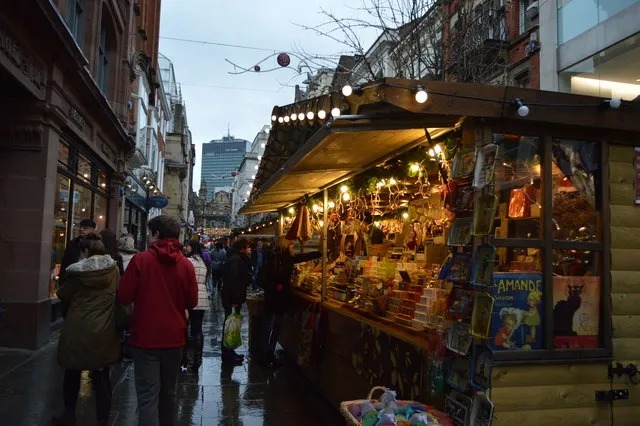
Photo: N Chadwick , CC BY-SA 2.0, via Wikimedia Commons
You can smell it before you see it: sugar, diesel, and the faint whiff of a generator doing its best. Then the wooden huts appear, arranged in rows like a spreadsheet with fairy lights. A sign says ‘Willkommen’. A man in a bobble hat is selling candles shaped like snowmen. And you think, with a sinking familiarity, I have been here before. Not this town, necessarily. But here.
Britain’s Christmas market is not really a market. It is a travelling repertory company: same set, same props, same slightly damp cast, new venue. The posters change. The chalets do not.
The Set Has a Passport
Somewhere in the Midlands there is a warehouse that smells of pine and invoice. It holds the nation’s supply of alpine chalets: flat-packed, reused, and dispatched to town centres like a theatrical touring production of Christmas. The huts are not authentic. They are authentic-ish. They have the correct number of wooden hearts and a roof pitched at the angle that says ‘Bavaria’ without committing to any actual geography. The same reindeer made of twigs will appear in three different counties before December. The same sign reading ‘Glühwein’ will be zip-tied to a different fence. It is a supply chain with tinsel.
The Deposit Scheme Is the Only Real Economy
The only genuinely thriving business at a British Christmas market is the mug deposit. You pay £3, or £5, or whatever the local council has negotiated with the souvenir industrial complex, and you receive a ceramic vessel with the town’s name on it. You will not return it. Nobody returns it. The deposit is not a deposit; it is a forced purchase of a commemorative object you will keep in a cupboard until a future house move, when you will stare at it and wonder which town it came from. The mug is the receipt. It is also the only proof you were there. In a world of digital tickets, the Christmas market mug is a stubborn little lump of evidence: I queued in the cold, and all I got was this vessel.
Nine Quid for a Sausage and a Sense of Tradition
The food is the same everywhere because the food is the point. A bratwurst in a bun will cost you £9. It will be fine. It will not be nine pounds fine. You will eat it standing up, with one hand, while trying to protect your mulled wine from a passing pram. The ‘authentic German stall’ is often run by a man called Dave from Nuneaton who has learned four words of German and is using them with confidence. The stollen is dense enough to be used as a doorstop. The crepes are £8 and arrive with the structural integrity of a receipt. And yet: the onions. The mustard. The cold air that makes everything taste like an event. This is not cuisine. It is atmosphere with calories.
The Brass Band Has a Warrant Out
At some point, a brass band will play ‘Fairytale of New York’. They will not play it well. They will play it with the enthusiasm of a school assembly and the tuning of a kettle. The song is a duet about mutual disappointment, which makes it perfect for a Christmas market, but the brass band version strips out the bitterness and leaves only the tune, murdered politely. Then they will attempt ‘Merry Xmas Everybody’ and you will understand why Slade never had to do this in the cold. The brass band is not entertainment. It is a legal requirement, like a fire exit. You cannot have a Christmas market without one. You can have a Christmas market without a working cash machine, but not without a brass band.
You Have Done This Before
So why do we go? Because the alternative is standing in a different cold place. Because ‘it’s tradition’ is a sentence that ends most arguments in Britain. Because the market offers a rare thing: a social event where the only skill required is the ability to queue and the only currency is a £9 sausage. We go because we have always gone. We go because the group chat said ‘shall we?’ and nobody had the energy to say no. We go because there is something oddly comforting in the repetition. It is a panto you can drink. You know the plot. You know the villain is the price of the mulled wine. You know the ending is a cold walk back to the car.
A Field Guide to the Repeat
- Arrive before 4pm, when the lights are on but the crowds are still at home pretending they won’t come.
- Bring cash. The card machine will be ‘having a moment’ and the queue for the cash machine will be longer than the queue for the bratwurst.
- Wear boots. The ground is a mixture of woodchip, spilled glühwein and regret.
- Do not make eye contact with the choir. They will ask you to join in.
- Buy the mug. You are going to buy the mug. Accept it.
Britain’s Christmas market is a tribute act. It tours. It recycles. It charges you for the privilege of standing in a car park with a wooden roof. But there is a reason we keep buying tickets. Underneath the sneer, there is a small, stubborn affection for the whole ridiculous enterprise. It is the same huts, the same sausage, the same song. And this year, in a town near you, it will be exactly the same again. Half empty, yes. But the mug is full.