A Modest Proposal: Please Let Us Be Bad at Hobbies Again
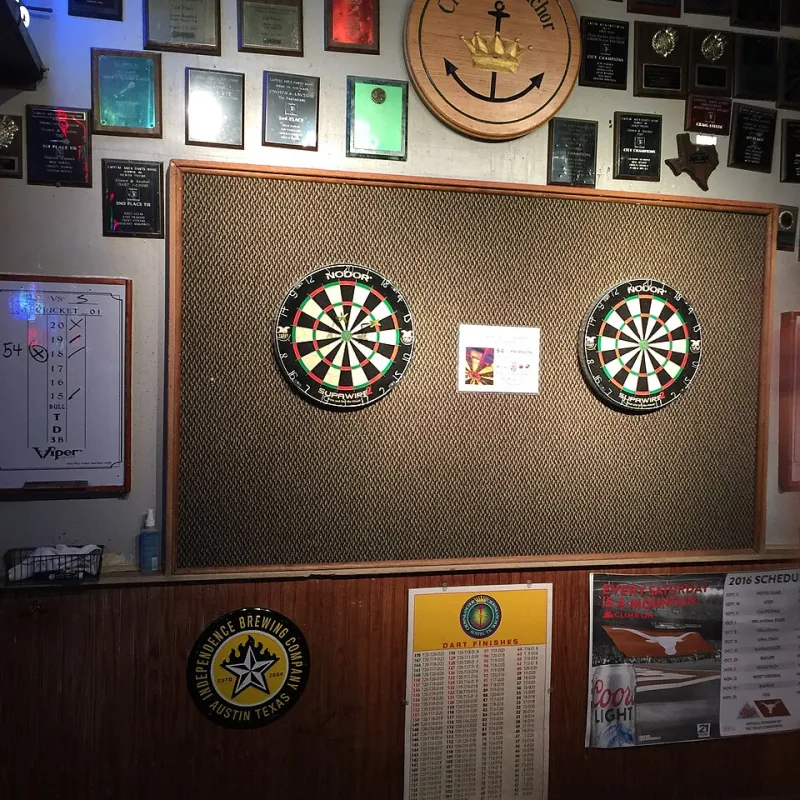
Photo: Kurt Kaiser, CC0, via Wikimedia Commons
I was recently asked what I do to relax. I said I sometimes play darts in a pub where the board is held together with hope and Blu Tack. The person nodded politely, then asked if I had thought about entering a league. Not really, I said. I am not good. That, apparently, was the wrong answer. It is 2026, and even a half-arsed game of arrows is supposed to be an opportunity for personal growth, community building and — God help us — content.
British adulthood has been colonised by the language of improvement. We do not have hobbies any more. We have side hustles. We have passion projects. We have wellness journeys. We have a small business selling candles made from the wax of other, failed candles. Everything must be monetised, optimised or at least photographed for a grid. The idea of doing something badly, for no reason, with no intention of getting better, has become faintly radical.
The tyranny of the well-made thing
There is a particular kind of person — you have met them — who cannot simply enjoy a thing. They must become excellent at it. They take up running and within a month they are talking about split times. They buy a sewing machine and soon they are explaining the difference between a French seam and a flat fell. They start making sourdough and suddenly the kitchen smells like a yeast-based cult.
I am not against competence. Competence is useful. It gets the shelves put up. But the cult of doing things properly has leaked into every corner of leisure, and it has made us exhausting to be around. If you cannot be bad at something, you cannot be a beginner. If you cannot be a beginner, you cannot be curious. And if you cannot be curious without producing a result, you are not relaxing. You are working for free.
Pub darts and other noble disasters
Pub darts is the last great refuge of the mediocre. Nobody in a proper pub cares if you hit the board. They care that you took your turn and did not stand in front of the oche with a look of spiritual intensity. The beauty of darts is that it is almost entirely about the ritual: the pint, the chalk, the gentle insult, the moment someone hits a treble twenty and everyone pretends not to be impressed. It is a game designed for people who are fine with being a bit rubbish.
The same goes for pool. The same goes for dominoes. The same goes for any activity where the main outcome is that an hour passes and you have spoken to another human being without mentioning your five-year plan. These are not lesser hobbies. They are better hobbies, because they do not ask you to become a brand.
Bad watercolours, good company
A few years ago, a friend bought a watercolour set. She painted a landscape that looked like a bruise and a bowl of fruit that looked like a threat. She loved it. She did not frame them. She did not start an Etsy shop. She put them in a drawer and occasionally got them out to laugh at the tree that looked like a leg. This, to me, is the ideal relationship with a hobby. It is not a second job. It is a small, private rebellion against the idea that every hour must produce value.
We need more bad watercolours. We need more people gluing together wonky birdhouses and then hiding them in the shed. We need more adults who will admit that they are not naturally gifted at something and are doing it anyway, because it is fun and the alternative is another evening of scrolling.
The choir that shall remain tone-deaf
Community choirs are wonderful, but they have been infiltrated by the same virus. You turn up to sing, and suddenly there is a vocal warm-up and a discussion of blend and a concert you are expected to sell tickets for. Some of us just want to stand in a church hall and bellow a song we half-remember from the radio. Some of us are not altos. Some of us are barely a baritone. Let us be joyful and flat.
The same applies to book clubs. It is supposed to be a hobby, not a seminar. If I have not finished the book, I should be allowed to say so and ask what happened at the end. That is not a failure of intellectual rigour. That is a Thursday.
The abandoned ukulele as a monument to hope
Every home has one. The ukulele bought in a moment of optimism. The guitar with two strings. The yoga mat rolled up behind the door like a guilty secret. We treat these objects as evidence of our inadequacy, but we should treat them as evidence of our humanity. We tried something. It did not stick. That is allowed.
The alternative — turning every passing interest into a six-week course, a profit margin and a LinkedIn post — is not a life. It is a pitch deck. And I am not sure about you, but I do not want my leisure time to be assessed for its scalability.
A hobby is not a CV
There is a reason we are so tired. We have turned rest into another arena for achievement. Even the things we do to escape work have been colonised by the logic of work. The result is a country full of people who are exhausted and oddly well-rounded, with a lot of unfinished projects and a nagging sense that they are falling behind.
So here is my modest proposal: let us be bad at things. Let us play darts without joining a league. Let us paint badly and not post it. Let us sing loudly and wrongly. Let us pick up the ukulele, play three chords, put it down for another two years and feel no shame. A half-empty hobby is not a failed passion. It is an honest one. And in 2026, honesty might be the most radical leisure activity of all.