A Fiver Says You're Good For It: Britain's Round-Buying Credit Crunch
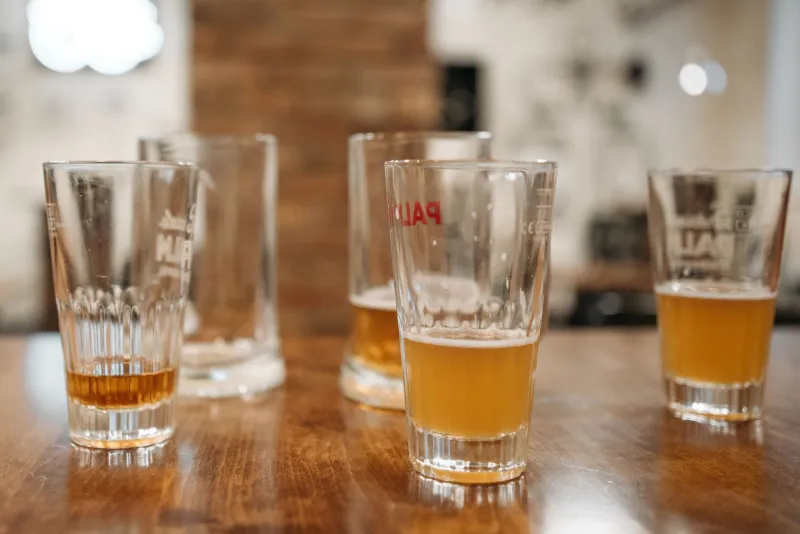
The other night I watched a man order four pints, tap his card, and then — with the ceremonial gravity of a person serving divorce papers — open a spreadsheet on his phone. Not a joke. A spreadsheet. Columns. Conditional formatting. He was, he explained, "tracking the round." Around the table, three other adults nodded as if this were normal. Which, increasingly, it is.
The Round Was Never a Gift. It Was a Futures Market.
The British round is one of the last great pieces of unregulated financial infrastructure. You buy now, you receive later, and the whole thing runs on a soft credit rating built out of eye contact and the firm belief that Gavin will not, this time, disappear to the toilet when it's his turn.
It was never really about the beer. It was a futures contract written in lager. A promise that you would be back, that you would pay, that you were good for it. No one asked for collateral. No one ran a credit check. The system worked because everyone understood the alternative: a pub full of adults nursing single pints like they were rations, glancing nervously at the bar, waiting for someone else to move first.
That's the bit we're losing. Not the drinking. The waiting for someone else to move first.
The £8 Pint and the Collapse of the Gold Standard
Then the pint got expensive, and the arithmetic got ugly. When a round of four costs the same as a decent pair of trainers, the old maths stops adding up. The £8 pint — increasingly common in any postcode with a "small plates" menu and a chalkboard promising "natural wine" — has done what inflation always does to informal credit: it has made every transaction feel like a decision.
You can no longer float a round on the assumption that it'll all come out in the wash. It won't. It'll come out in your banking app at 23:47, with the name of a man you barely know attached to a payment request and a crying-laughing emoji.
And the bar has made it worse. Card-only. Order-at-the-table. QR codes stuck to the wood like little tombstones. The physical trip to the bar used to be the ritual's heartbeat: you'd stand there, get served, do the small dance of remembering who wanted what, return a hero with a pint balanced on each knuckle. Now you tap a QR code, pay for your own drink, and the round dies quietly in the gap between the app and the table.
The Itemised Group Chat: Austerity With Receipts
There's a new genre of group chat message, and it goes something like this: "Just to be clear, I got the last two, so Mark owes me £11.20 and Sarah owes me £3.80 because she had the lime and soda."
The lime and soda is always itemised. The lime and soda is the canary in the coal mine.
The itemised group chat is not just admin. It's a cultural shift. It says: I don't trust you, and I have screenshots. It is relationships by audit. It is the pub as a line item. We have replaced the warm fog of "don't worry about it" with the cold clarity of a Monzo request titled "Pints xx".
And the apps! Splitwise. Payment requests. The phrase "I'll get you back" has gone from a casual promise to a legally non-binding statement that will be enforced by a notification at 8am on a Sunday. Somewhere, a man is being chased for £4.60 by a colleague he has not spoken to since the Christmas do.
The Vanisher: A Case Study in Counterparty Risk
Every pub has one. The person who is always at the bar when it's their round. Not at the bar ordering. Just at the bar. Looking at the pumps. Reading the specials board with the intensity of a scholar. They are not a monster. They are a rational actor in a broken market. They have realised that the round can be gamed, and they are gaming it.
But everyone else has noticed. The result is not that the Vanisher gets away with it; the result is that no one gets a round at all. We all buy our own, and the pub becomes a room full of strangers paying for their own drinks, which is basically a Wetherspoons at 9am.
What We Lose When We Stop Rounding
The round was inefficient. It was unfair. It was mildly coercive and occasionally ruinous, especially if you were the one who suggested it just as everyone switched to doubles. It was also the last remaining social contract in Britain that didn't require a lawyer, a witness or a thumbs-up emoji.
It said: I will be here, and so will you. It said: we are doing this together. It said: the glass is half full, even if the site is called Half Empty.
Now we have ledgers. We have receipts. We have the quiet horror of a mate saying "I'll just get mine" and meaning it.
The round didn't die of cruelty. It died of admin. And somewhere, in a pub with QR codes on every table, a man is opening a spreadsheet and ordering a single pint — and the glass, for once, is entirely his own.