The Croissant Tax: Britain’s Little Treat Has Become a Standing Order
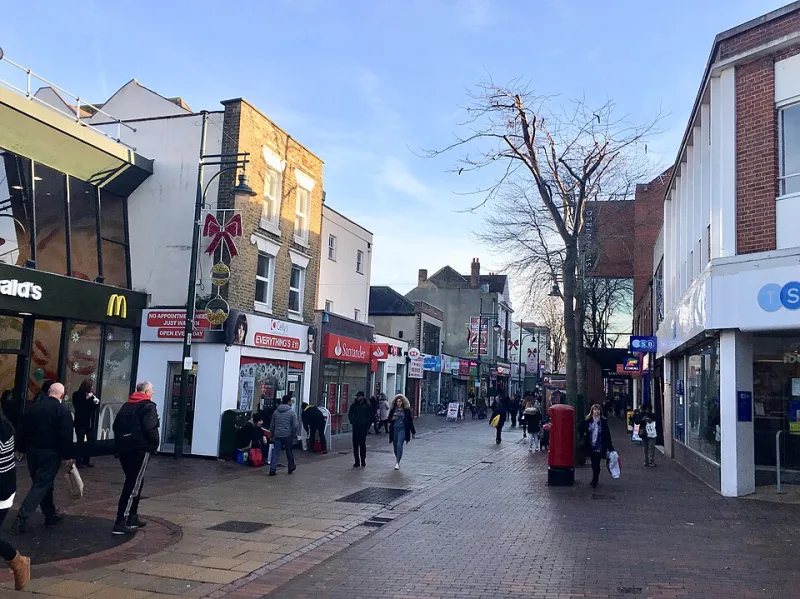
Photo: Chris Whippet , CC BY-SA 2.0, via Wikimedia Commons
Britain has always had small pleasures. A bag of chips on a cold seafront. A pint that costs less than the bus home. A custard cream with a cup of tea strong enough to strip paint. These were treats in the old sense: occasional, modest, and faintly embarrassing if you had too many. Then something shifted. The little treat stopped being a nice thing that happened to you and became a thing you owed yourself. It is no longer a reward. It is a standing order with flaky pastry.
The £4 handbrake
You know the ritual. You leave the house, perform some mild inconvenience of modern life, and immediately feel entitled to compensation. The commute was crowded. The meeting was pointless. The weather is doing that thing where it cannot decide between drizzle and damp accusation. So you buy a coffee. Not because you need caffeine, but because you need a small, purchasable proof that you are coping.
And that is the trick. The little treat used to be a punctuation mark. Now it is the sentence. A flat white and a pastry is not a snack; it is a mood-management system with a loyalty app. The croissant is not food. It is a tiny buttery therapist. The iced bun is not breakfast. It is an emotional crutch with raisins.
The maths is grim and oddly cheerful. Four pounds here, three pounds there, a £4.50 something on a Friday because you survived the week, and suddenly you have spent the price of a decent pair of shoes on the vague feeling that you deserve a bit of nice. The little treat has become a micro-tax on being alive in Britain in 2026. It is levied at the till, paid by card, and justified with the phrase: I have had a day.
From lockdown lanyard to marketing lever
The little treat did not appear from nowhere. In 2020, when the world shrank to the size of a local park and a supermarket queue, small comforts became a way of marking time. A takeaway coffee was an event. A bakery visit was a holiday. We learned to reward ourselves for leaving the house because leaving the house was, briefly, the whole achievement.
That was fair enough. What is less fair is what happened next. The habit was spotted, packaged, and sold back to us. Brands realised that 'self-care' was a more palatable word than 'consumer spending'. Coffee chains built subscription models. Bakeries discovered that a queue outside made the pastries taste of exclusivity. Supermarkets began selling scented candles next to the meal deals, as if to suggest that a £12 candle could fix whatever a £3.50 sandwich could not.
By 2022, inflation was doing its grim karaoke act, and the little treat became both more expensive and more necessary. If a big holiday was out of reach and a house was a fantasy, then a £4 coffee felt like the last affordable luxury. It was not really affordable, but it was small enough to pretend. That is the genius of the little treat: it is priced just below the point where you have to think about it properly.
The carrot is now the subscription
What we have now is not indulgence. It is a subscription economy for feelings. You do not buy a coffee; you buy a monthly allowance of small rewards. You do not buy a pastry; you buy a reason to leave the house. The little treat has been repackaged as a lifestyle, and lifestyles are expensive.
There is also a performative element. The little treat must be photographed. It must be placed on a clean table with good light and a book you are not reading. It must be captioned with something about being kind to yourself, as if kindness were a pastry and not, say, going to bed at a reasonable hour or refusing to answer emails after seven.
And because it is photographed, it must be upgraded. A normal coffee becomes a speciality coffee. A normal croissant becomes an almond croissant from a place with no signage and a queue. A normal Tuesday becomes a small festival of self-care. The treat is no longer the thing you buy. The treat is the identity you buy around it.
Self-care or self-checkout?
None of this is to say that small pleasures are bad. They are one of the few things keeping the country upright. A good pastry is a good pastry. A decent coffee is a decent coffee. The problem is the obligation. The problem is the feeling that a day without a little treat is a day you have failed to look after yourself. The problem is that a coping mechanism has been turned into a customer retention strategy.
We have ended up in a strange place: a country that feels guilty for spending £4 on a coffee and guilty for not spending it. We have made the little treat both a necessity and a weakness. We have turned the croissant into a coin, and we are flipping it every morning.
So here is a modest proposal. Bring back the ordinary treat. The one you do not photograph. The one that does not come with a loyalty card. The one that is slightly disappointing and therefore reassuring. Buy the coffee because it tastes nice, not because you have survived until 10:15am. Buy the pastry because you want it, not because you have left the house. And if you cannot manage that, at least stop calling it self-care. It is a croissant. It is £4. It is not a personality.