The Sorry Line: Notes From a Cold Platform
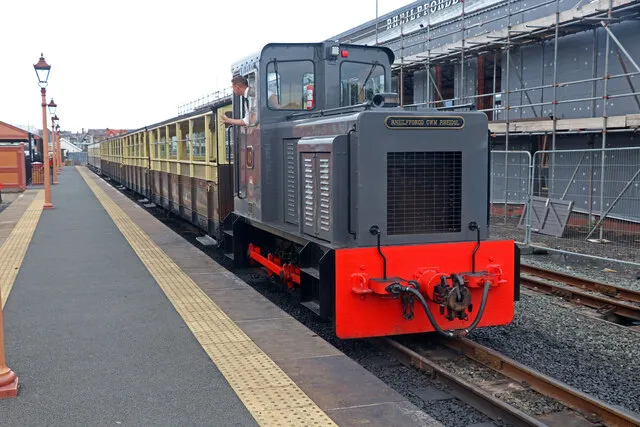
Photo: Chris Allen , CC BY-SA 2.0, via Wikimedia Commons
There is a voice that arrives at half seven on a Tuesday morning, and it does not belong to a person. It belongs to a recording. It says: “We are sorry to announce that the 07:42 to London Paddington has been cancelled due to a shortage of train crew. We apologise for any inconvenience this may cause.”
You notice the grammar before you notice the grief. We are sorry to announce. Not “we are sorry”. Not “this is our fault”. Just an announcement, delivered sorrowfully, as though the railway itself were a bystander who happened to be passing when the timetable was mugged.
The Grammar of the Non-Apology
British corporate apology has evolved into something close to a liturgical form. It is passive, it is weather-shaped, and it is never anybody's fault in particular. Trains are not cancelled by anyone; they are cancelled due to things. Crews are short. Signals fail. Points fail. A safety inspection has taken place, apparently of its own accord, in the manner of a fox entering a bin.
Note the word “inconvenience”. It is doing an enormous amount of labour. A forty-minute hold on a freezing platform with no seats and no working toilet is not an inconvenience. It is a small, recurring assault on your sense of self. But “inconvenience” is the word we have, so we accept it, the way you accept a relative's opinion on your haircut.
A Lexicon for the Delay-Weary
Learn these and you will never be surprised again.
- Signal failure. Something, somewhere, has stopped talking to something else. Nobody knows which. It will be fixed by “approximately 10:00”, a time that is not a time but a mood.
- Points failure. The metal bits that decide which way the train goes have declined to decide. Frankly, relatable.
- Shortage of train crew. Someone has called in sick, and the entire timetable has the structural resilience of a house of cards in a draught.
- An operational incident. Someone has done something. We will not be told what. Do not ask.
- Leaves on the line. Not a joke, and somehow worse for being real. The wrong kind of snow was 1991; this is the annual autumn sequel nobody asked for.
- Congestion. Other people, existing, in front of you.
The Theatre of Contrition
What fascinates is the performance. There is the flat, tired platform recording, and then there is the chirpy human announcement from the guard, which usually contains the phrase “bear with us” and the implication that we are all in this together, which is true in the way that being in a lift with strangers is togetherness.
Occasionally you get what the industry calls “proactive customer communication”: a cheerful person in a high-visibility vest telling forty shivering adults that the next service will be “formed of fewer coaches than advertised”. This is railway for “it will be full, you will stand, and the man with the bicycle will win”.
Staff at the information desk perform the harder emotional work. They are the shock absorbers of the network, absorbing fury that is not theirs, apologising for decisions made in an office somewhere in a city none of us have visited. If you have ever been genuinely kind to a member of platform staff in November, you have done a small good thing.
Treat It Like Weather
The British commuter has developed a coping strategy so effective it should be studied: we have reclassified the railway as weather. We do not rage at rain. We do not shake our fists at fog. We look at the app, sigh, put on a second jumper, and adjust. “There's disruption on the line” is said in the same tone as “there's a frost coming”.
This is not resignation. It is triage. Anger is expensive and it has to be spent carefully — saved for the truly outrageous, like a cancellation announced after the train has already appeared on the board, or a “delay” of 59 minutes when the threshold for compensation is 60.
The Emotional Labour of Platform 4
Nobody talks about the physical endurance. The temperature on an open platform in November is roughly that of a walk-in fridge with ambitions. The bench is designed by someone who hates the human spine. The coffee is £4.20 and tastes like a memory of coffee. And still we stand, in our good coats, phones at 4%, refreshing an app that has decided to be coy.
There is a particular loneliness to a delayed journey that has nothing to do with being alone. Everyone is doing the same thing. Nobody is speaking. Occasionally a stranger will catch your eye with an expression that says this, again, and that is the closest thing to community the railway has produced in decades.
A Half-Empty Survival Kit
Throw away the optimism and pack accordingly.
- A thermos. Not a fancy one. The one your nan had.
- Layers, plus one extra layer you think is excessive. It isn't.
- A power bank, because the app eats battery faster than a delay eats morale.
- Snacks that survive being sat on.
- A book, because the signal will die somewhere near Reading.
- Absolute emotional neutrality. Expect nothing. Be mildly pleased if you arrive.
Delay Repay: The Paper Trail of Vengeance
The compensation system is a masterwork of friction design. You must claim within 28 days, prove your journey, prove your ticket, prove that you were there, and then wait a fortnight for a rail travel voucher you will use to be disappointed again. Half the country has simply given up and accepted the loss as a kind of subscription fee for leaving the house.
The Only Honest Apology
So here is the truth: the announcement is not for you. It is for the record. It exists so that the company can say it communicated, and so that you cannot say you were not told. The apology is a receipt.
And yet — and this is the half-empty mercy of it — occasionally, very occasionally, a guard will come on and say, plainly, “Look, this is rubbish, I'm sorry, there's a problem with the train and I don't know when it'll be fixed.” No theatre. No “inconvenience”. Just a person, admitting it.
You will remember that announcement for years. It is the only one that ever felt like an apology, and it is the only one that will never be written down anywhere.