The Tie-Breaker Will Destroy You: A Field Guide to the Pub Quiz Zoo
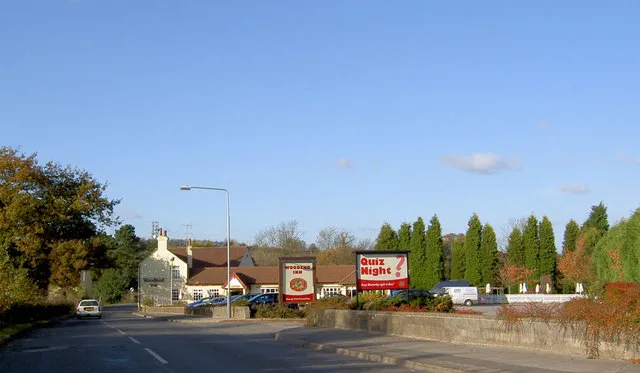
Photo: Steve F, CC BY-SA 2.0, via Wikimedia Commons
The pub quiz is Britain's last great amateur blood sport. It has no league table, no prize money worth mentioning, and no spectators. And yet, every week, grown adults who cannot remember their own PIN numbers will fight to the death over whether Kraków is spelled with a diacritic.
It begins at eight. It always begins at half eight. And someone has been sat at the good table since six.
The Congregation Assembles
By quarter to eight, the pub has divided itself with the quiet ruthlessness of a school dinner hall. There is the team with the pub's only functioning pen. There is the team of four who have ordered one Diet Coke between them and will nurse it for three hours. There is the team called something like Quiz Team Aguilera or Norfolk 'n' Chance, secure in their own cleverness.
And then there is you, with your one good category and your nagging suspicion that the picture round will be footballers.
The Team Who Treat It Like a Viva
You know them. They have a clipboard. Someone is keeping score on their own sheet, independently, in case of “discrepancies”. They do not celebrate correct answers; they confirm them, the way a doctor confirms a diagnosis, with a small, satisfied nod.
They will query a mark. They will query a mark in round two of eight. They will say the words “I'd like to appeal that” without irony, and the quizmaster will sigh, and the entire room will lose four minutes of its life. They have never lost. They have, on one occasion, come second, and it is spoken of still.
The Phone Under the Table
The cheat is a constant, and everyone knows who they are. It is the person whose face glows faintly blue whenever a question is asked, who has an uncanny knowledge of obscure B-sides and an inability to explain how they know. They are not subtle. They think they are subtle.
The unspoken rule is that phones stay in pockets, and the truly British enforcement mechanism is not confrontation but a sort of collective, glacial stare. Nobody says anything. Everybody knows. The team next to them will simply never share their crisps again.
The Quizmaster With a God Complex
There are two kinds. The reluctant quizmaster is a hero: a tired man with a microphone and a printout, who wants to get this over with before the football. The other kind has a favourite round. The other kind has written a question about the Peloponnesian War and is visibly delighted that nobody got it.
He does voices. He does a “fun” round where the answers all rhyme. He says “ooh, close” in a way that suggests it was not close at all. Somewhere in the back of his mind, a career in local radio is still technically possible, and this is as close as he will get.
The Couple Who Argue Over Capital Cities
They came for a nice night out. They will leave in silence. It starts gently — a disagreement over Canberra, or whether Ankara counts. Within three rounds it has become a referendum on their entire relationship, conducted at low volume over a bowl of chips.
“You said Canberra.” “I didn't say Canberra, I said near Canberra.” “It's Canberra.” “It's not Canberra.”
It is Canberra.
The Unspoken Rules
Every pub quiz runs on a constitution nobody has written down and everybody enforces.
- No phones. Even though a phone in 2026 can answer any question in under a second, and everyone is pretending this isn't the case.
- No shouting out. Except by the one man at the bar who has had four pints, keeps shouting out, and is invariably right.
- The picture round is always too hard. It is tradition.
- The music round is always too easy. This is the quizmaster's insurance against a riot.
- Spelling counts unless you're the team that spelled it wrong, in which case it absolutely does not.
- Never ask for the answer to be repeated more than once. You will be judged.
- Buy something. The landlord is watching. The landlord is always watching.
The Tie-Breaker: Britain's Cruellest Invention
Two teams level on points. The room goes quiet in a way it hasn't all evening. The quizmaster, now fully in his element, announces a tie-breaker: nearest to the number wins.
The question is always appalling. The population of a city nobody has visited. The length of a river that turns out to be shorter than anyone imagined. The number of bones in a human body, which is 206, and which half the room confidently gets wrong at high volume.
Each team writes a number. Each team looks at the other team's number. Each team immediately believes the other team is either cheating or an idiot. Nobody will ever know the true answer, because the quizmaster himself only has an approximate figure from a website he half-remembers.
Someone wins. The prize is a round of drinks or a £20 bar tab that will not cover a round of drinks. They will be gracious about it in a way that suggests they will not be gracious about it later.
Why Nobody Believes It Was Basingstoke
There is a particular category of answer — the unexpected, slightly unglamorous English town — that no quiz team will ever accept on first hearing. Basingstoke. Slough. Kettering. These are not answers; they are provocation.
Somebody will say “no”. Somebody will say “is it not Swindon?” Somebody will insist it's a made-up place, and the quizmaster will say, with enormous weariness, “It's Basingstoke. It's been Basingstoke for eleven years. We did it in 2019.”
And still, round the room, eleven people will shake their heads. Not because they know better. Because being wrong together is more fun than being right alone.
What It's Actually For
Nobody comes for the quiz. They come for the two hours where the phone is face-down on the table, where the conversation is low-stakes and loud, where the worst thing that can happen is losing to a team called Norfolk 'n' Chance by one point on a question about bones.
So go. Bring a pen. Accept that you will not win the picture round. Do not, under any circumstances, argue about Canberra in public.
And when the tie-breaker comes, write down a number. It's Basingstoke. It's always Basingstoke.