The Turning Point: How Britain Turned a Stroll Into a Hostage Negotiation
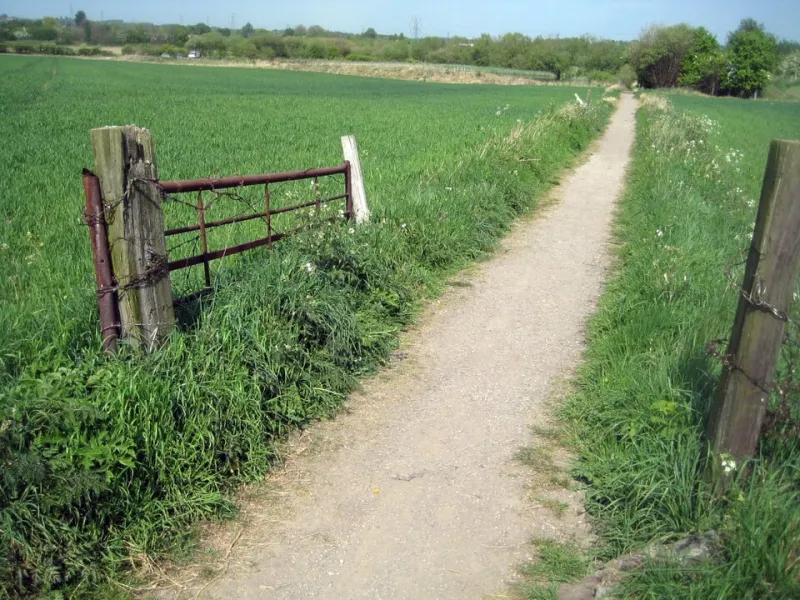
Photo: Mike Kirby , CC BY-SA 2.0, via Wikimedia Commons
The message lands on a Thursday evening, as these things do. “Fancy a little walk at the weekend?” Note the word. Little. It is doing an enormous amount of work. It is the same word used to describe a small glass of wine, a minor surgical procedure and a brief conversation with HR. In all three cases, somebody is about to have a worse afternoon than advertised.
Britain does not really have hikes. Hikes are German, or American, or undertaken by people with poles and a point to prove. Britain has the little walk: a two-hour commitment dressed as a casual offer, conducted in a waterproof jacket, and terminally unable to say what it actually is, which is a therapy session with a gradient.
The Invitation Is a Contract With No Terms
There is no such thing as a spontaneous walk in this country. There is a text, a reply, a suggested day, a counter-suggested day, a discussion about which car park, and a final message reading “great, see you then!” which everyone understands to be a legally binding document.
The genius of it is the vagueness. Ask a friend to the cinema and they know what they are getting: two hours, one bag of overpriced pick-and-mix, no conversation required. Ask them on a little walk and you have signed them up to an unspecified distance, an unspecified duration, an unspecified number of stiles, and an entirely specified set of opinions about their life choices, delivered somewhere near a trig point.
Because the walk is where Britain has its difficult conversations. Not at the table, where the cutlery clatters and someone’s mother is listening. Not on the phone, where you can hang up. On a hillside, where neither party can leave without an awkward descent and a shared lift home.
Footwear Is the First Round of Negotiation
Every little walk begins with a silent audit. You arrive at the meeting point and immediately assess everyone’s shoes. Trainers mean either optimism or passive aggression. Walking boots mean someone has read the route description and is quietly furious about it. Wellies mean a farm shop and a refund on the parking.
Then comes the bag check, conducted with the studied nonchalance of border control. A rucksack suggests preparedness, which in Britain is borderline rude, as if you have brought your own cutlery to a dinner party. A tote bag suggests a person who has been misled and will spend the next ninety minutes saying “I didn’t realise it would be this muddy” in a tone that suggests they are assembling a legal case.
The true purpose of the footwear conversation is to establish who is to blame when the route turns out to be three miles longer than the “little” promised. The correct answer is the person in the cleanest shoes, because they clearly haven’t been listening to the forecast.
Weather Talk Is the Pre-Meeting
Before any real topic can be raised, there is the meteorological preamble. This is not small talk. This is the agenda-setting session. “It might spit later” means we are going to have a serious conversation about your job. “They said it would clear up by eleven” means someone has decided to be optimistic about the marriage and we are all going to have to sit with that.
The weather app is consulted roughly every eleven minutes, by four different people, each of whom has a different app and a different opinion, none of which is accurate. Somebody will mention the Met Office as though citing an ancient text. Somebody else will say “it’s the wind that gets you” and be immediately corrected by a person who has decided, on the basis of a single camping trip in 2014, that it is actually the damp.
By the time you reach the first gate, the group has already split into the two factions that will define the entire outing: the Front Walkers and the Talkers.
Route Politics and the Sacred Turning Point
The route is not a plan. It is a power struggle conducted at 2.5 miles an hour.
There is always one person holding the phone with the OS map open, announcing distances in a tone of false modesty. There is always one person who claims to know a shortcut. There is always one person who has been here before, in a different season, and is now hopelessly lost but unwilling to admit it, leading the group up a slope with the confidence of a man who has never been corrected in his life.
And then comes the moment the entire walk has been built around: “We should probably turn back.”
Read it closely. This is not a suggestion. It is a test of character. The person who says it first has claimed the moral high ground, because they have prioritised the group’s wellbeing over their own ambition, and they will mention this at the pub. The person who agrees too quickly has failed the test. The person who says “we’re nearly there” has taken a gamble that will be discussed for years if the summit turns out to be a gate and a view of a distribution centre.
Nobody turns back. Everybody says they are turning back. The walk continues for another forty minutes, in silence, uphill.
The Ambush at the Summit
Here is the real destination: the bit where the path widens, the wind picks up, and someone says, with studied casualness, “So. Are you actually happy?”
You cannot escape. You cannot fake a phone call with no signal. You cannot busy yourself with a flask, because you finished the flask an hour ago. You are on a hill, in a waterproof, being asked to justify your existence by a person who brought a banana.
This is the little walk’s true function. It is the venue Britain chooses for the conversations that would be too much in a kitchen. Proposals happen on walks. Redundancies are softened on walks. Friendships are quietly ended on walks, usually by someone saying “we must do this more often” in a tone that everyone recognises as a valediction.
And because you are outdoors, in public, with the wind in your eyes, you are permitted to be emotional without it counting. Tears are just weather. A wobble in the voice is just the cold. It is the most British form of intimacy available: confession, conducted in fleece.
The Pub Is the Debrief, Not the Reward
The little walk ends, invariably, at a pub that is either two hundred yards further than anyone’s knees want or closed for a private function. Here, over a drink that costs more than the parking, the whole outing is retold as a triumph.
Distances are inflated. Hills are described as mountains. The turning point becomes a battle. Someone mentions Kinder Scout in 1932, as if their three-mile loop around a reservoir is part of that proud tradition of access to the countryside. Somebody’s step count is produced. Somebody’s Strava is mentioned. Somebody says “we should make it a regular thing” and the entire group goes briefly quiet, because they know, and you know, and the person who brought the banana definitely knows, that it will happen again in February, in worse weather, and the real conversation will still be waiting at the top of the hill.
So when the text arrives next Thursday, and it will, remember what you are being offered. Not fresh air. Not exercise. A negotiation, a competition and an intervention, all conducted at a pace that means you cannot pretend to have misunderstood. Bring boots. Bring a flask. Bring something to say at the summit, because they have been rehearsing theirs since Tuesday.